返回列表 發帖

[轉貼] 敘利亞阿賽德Bashar al-Assad命盤

巴沙爾·阿薩德[編輯]

維基百科,自由的百科全書
巴沙爾·阿薩德
بشار الأسد
Bashar al-Assad in Russia (2015-10-21) 08.jpg
阿薩德2015年在俄羅斯
敘利亞總統
現任
就任日期
2000年7月17日
總理 穆罕默德·穆斯塔法·米魯
穆罕默德·納吉·奧特里
阿德爾·薩法爾
利亞德·法里德·希賈布
歐馬·加拉瓦基
瓦埃勒·納德爾·哈勒吉
伊馬德·哈米斯
前任 阿卜杜拉希姆·卡達姆(代理)
敘利亞復興黨地區領導機構書記
現任
就任日期
2000年6月24日
副職 穆罕默德·賽義德·布希坦(助理書記)
前任 哈菲茲·阿薩德
個人資料
出生 巴沙爾·哈菲茲·阿薩德
بشار حافظ الأسد

1965年9月11日(52歲)
敘利亞大馬士革
政黨 敘利亞復興黨
其他政黨 全國進步陣線
配偶 阿斯瑪·阿薩德2000年結婚)
兒女 3名子女
母校 大馬士革大學
宗教信仰 伊斯蘭教阿拉維派
軍事背景
效忠  敘利亞
服役 敘利亞武裝力量
服役時間 1988年至今
軍階 元帥
部隊 敘利亞共和國衛隊(2000年前)

巴沙爾·阿薩德阿拉伯語بشار الأسدBaššār al-ʾAsad,1965年9月11日),現任敘利亞總統兼武裝部隊總司令、敘利亞復興黨總書記元帥軍階[1]、已故前總統哈菲茲·阿薩德之次子。2000年、2007年和2014年三次當選總統。

生平[編輯]

1965年9月11日,巴沙爾·阿薩德出生於大馬士革。家鄉位於敘利亞拉塔基亞省卡爾達哈區。

阿薩德在大馬士革大學學習醫學,並於1988年畢業。然後他在軍醫院眼科行醫,於1992年到英國倫敦、西區眼科醫院(Western Eye Hospital)學習,並結識了後來成為其妻子的阿斯瑪·阿薩德。巴沙爾原來想成為一名眼科醫師,在政治則並沒有太多抱負。

但在1994年,因其父原本培養的接班人巴塞勒·阿薩德(巴沙爾長兄),在一次車禍中去世,他的父親希望他接替巴西爾·阿薩德擔任敘利亞領導人。因此阿薩德回到敘利亞的家。他去到霍姆斯軍事學院,五年後成為一名上校。他作為他父親的顧問,採取行動打擊腐敗。

總統[編輯]

巴沙爾和第一夫人阿斯瑪·阿薩德

2000年哈菲茲·阿薩德去世後,根據敘利亞法律規定,總統必須至少40歲,敘利亞議會立即將憲法規定的總統年齡下限從40歲調低到34歲,6月巴沙爾順利當選。他也任武裝部隊總司令,並成為敘利亞復興黨領導人。巴沙爾當政之初承諾將在敘利亞進行政治和經濟制度改革,但是成效甚微。上台後,主要著手於敘利亞的經濟建設,而在政治改革方面則趨向停滯。

巴沙爾·阿薩德家族屬於阿拉維派教徒(伊斯蘭教什葉派的支派,占什葉派人口的13%)。由於穆斯林占敘利亞人口的87%,其中遜尼派占74%,什葉派占13%,所以阿拉維派僅占敘利亞總人口的6%。[2][3]不過,阿拉維派人士控制著該國的安全部隊,敘利亞政府也一直完全依靠著阿拉維派控制的軍隊來打擊反對政府的人:巴沙爾的弟弟,馬赫爾·阿薩德領導著該國精銳部隊——共和國衛隊和第四裝甲部隊;巴沙爾的姐夫,阿瑟夫·沙烏卡特(巴沙爾的姐姐布舒拉·阿薩德的丈夫)是軍隊的副總參謀長。

這些都使得遜尼派民眾產生了深深的怨恨。[4][5]作為該國少數種族的庫德人也為此產生許多抱怨和抗議行為。[5]他維持其父過去的世俗伊斯蘭路線,反對伊斯蘭原教旨主義

巴沙爾堅決反對美國在2003年發動的伊拉克戰爭

2007年,巴沙爾在全民公投中以99%得票率,成功連任,開始第二個七年的總統任期。2014年,巴沙爾成功連任,開始第三個七年的總統任期。

內戰[編輯]

2011年1月下旬開始,敘利亞爆發了大規模的反政府示威,巴沙爾及其政府正面臨著執政危機。2011年1月31日,《華爾街日報》採訪了總統巴沙爾·阿薩德,他表示現在是時候開始改革了;對於發生在突尼西亞埃及葉門等國的運動的看法時,他說中東已經到了一個新時代,阿拉伯統治者需要做更多改變以適應民眾不斷崛起的經濟需要和政治訴求。[6][7]

巴沙爾曾表態敘利亞不會受到埃及示威運動的影響。[8]阿薩德的顧問夏班指責遜尼派教士們煽動了遜尼派民眾的叛亂。[9]

2012年3月15日,聯合國秘書長潘基文在敘利亞衝突爆發一周年之際再次發出呼籲,要求敘利亞各派結束一切暴力行為,通過和平手段解決危機。潘基文在3月15日發表的一份書面聲明中指出,一年前的今天,敘利亞民眾走上大馬士革街頭,他們呼籲權利和自由的和平示威運動,在幾天內得到了來自其他城市民眾的響應。然而,敘利亞當局卻對此予以鎮壓,加上不明武裝分子多次策動襲擊,導致遠遠超過8000人死亡,包括大量平民與一部分士兵。[10]

英國衛報披露,巴沙爾2012年1月對全國發表重要電視演說時,以強烈措詞為自己塑造捍衛國家形象,並揚言以鐵腕對付反政府團體的態度,其實都是採納伊朗大使給予的建言,顯見伊朗在背後下指導棋[來源請求]

第三次當選[編輯]

2014年6月3日,敘利亞舉行自阿薩德家族1970年執政以來首次舉行的差額總統選舉,結果,巴沙爾·阿塞德以88.7%當選,成功連任。

6月4日,敘利亞人民議會議長拉哈姆宣布,現任總統巴沙爾·阿薩德在3日舉行的總統選舉中勝出,成功連任。[11]《紐約時報》認爲,這場選舉「不過是阿薩德進行自我炫耀的一場把戲」,該投票缺乏公正性。[12]

另外,敘利亞反對派還針對這次投票上傳了一段影片,在影片的末尾,一名男子把垃圾丟進了一個外觀與投票箱相似的垃圾箱裏。[13]

https://zh.wikipedia.org/wiki/%E5%B7%B4%E6%B2%99%E5%B0%94%C2%B7%E9%98%BF%E8%90%A8%E5%BE%B7

請從論壇首頁右上角進入「個人中心」,就可以編輯您個人的頭像、簽名檔及自我介紹。請用高級模式回覆,點HTML框,可有更多變化豐富版面。
不怕辛苦,就怕不公平;不怕卑微,就怕不公義。
可以哭泣,不要洩氣;可以悲傷,不要放棄!

Bashar al-Assad

From Wikipedia, the free encyclopedia
Bashar al-Assad
بشار اسد
Bashar al-Assad in Russia (2015-10-21) 08.jpg
Assad in Moscow in 2015
19th President of Syria
Assumed office
17 July 2000
Prime Minister Muhammad Mustafa Mero
Muhammad Naji al-Otari
Adel Safar
Riyad Farid Hijab
Omar Ibrahim Ghalawanji
Wael Nader al-Halqi
Imad Khamis
Vice President Abdul Halim Khaddam
Zuhair Masharqa
Farouk al-Sharaa
Najah al-Attar
Preceded by Abdul Halim Khaddam (Acting)
Regional Secretary of the Regional Commandof the Syrian Regional Branch of the Arab Socialist Ba'ath Party
Assumed office
24 June 2000
Deputy Sulayman Qaddah
Mohammed Saeed Bekheitan
Hilal Hilal
Leader Abdullah al-Ahmar
Preceded by Hafez al-Assad
Personal details
Born Bashar Hafez al-Assad
11 September 1965 (age 52)
Damascus, Damascus Governorate, Syria
Political party Syrian Ba'ath Party
Other political
affiliations
National Progressive Front
Spouse(s) Asma al-Assad (m. 2000)
Children
  • Hafez (b. 2001)[1]
  • Zein (b. 2003)
  • Karim (b. 2004)
Parents Hafez al-Assad
Anisa Makhlouf
Alma mater Damascus University
Military service
Allegiance  Syria
Service/branch Syrian Armed Forces
Years of service 1988–present
Rank Syria-Army-Mushir.svg Marshal
Unit Republican Guard (Before 2000)
Commands Syrian Armed Forces
Battles/wars Syrian Civil War

Bashar Hafez al-Assad (Arabic: بشار حافظ الأسدBaššār Ḥāfiẓ al-ʾAsad, Levantine pronunciation:[baʃˈʃaːr ˈħaːfezˤ elˈʔasad]; About this sound English pronunciation ; born 11 September 1965) is the 19th and current President of Syria, holding the office since 17 July 2000. He is also commander-in-chief of the Syrian Armed Forces, Regional Secretary of the Arab Socialist Ba'ath Party's branch in Syria. He is a son of Hafez al-Assad, who was President of Syria from 1971 to 2000.

Born and raised in Damascus, Assad graduated from the medical school ofDamascus University in 1988, and started to work as a doctor in the Syrian Army. Four years later, he attended postgraduate studies at the Western Eye Hospital in London, specialising in ophthalmology. In 1994, after his elder brother Bassel died in a car crash, Bashar was recalled to Syria to take over Bassel's role as heir apparent. He entered the military academy, taking charge of the Syrian military presence in Lebanon in 1998. On 10 July 2000, Assad was elected as President, succeeding his father, who died in office a month prior. In the 2000 and subsequent 2007 election, he received 99.7% and 97.6% support, respectively, in uncontested referendums on his leadership.[2][3][4]

On 16 July 2014, Assad was sworn in for another seven-year term after receiving 88.7% of votes in the first contested presidential election in Ba'athist Syria's history.[5][6][7] The election was dismissed as a "sham" by the Syrian opposition and its Western allies,[8][9]while an international delegation of observers from more than 30 countries[10] stated that the election was "free and fair".[11] The Assad government describes itself as secular,[12]while some political scientists have claimed that the government exploits sectarian tensions in the country and relies upon theAlawite minority to remain in power.[13][14]

Previously seen by the international community as a potential reformer, the United States, the European Union, and the majority of the Arab League called for Assad's resignation from the presidency after he allegedly ordered crackdowns and military sieges on Arab Spring protesters, which led to the Syrian Civil War.[15][16] During the Syrian Civil War, an inquiry by the United Nationsreported finding evidence which implicated Assad in war crimes.[17] In June 2014, Assad was included in a list of war crimes indictments of government officials and rebels handed to the International Criminal Court.[18] Assad has rejected allegations of war crimes, and criticised the American-led intervention in Syriafor attempting regime change.[19][20]

Early life

Childhood and education: 1965–1988

Hafez al-Assad with his family in the early 1970s. From left to right: Bashar, Maher, Anisa, Majd, Bushra, and Bassel.

Bashar Hafez al-Assad was born in Damascus on 11 September 1965, the second oldest son of Anisa Makhlouf and Hafez al-Assad.[21] Al-Assad in Arabic means "the Lion"; Assad's peasant paternal grandfather had changed the family name from Wahsh (meaning "Savage" or "Monster") upon acquiring minor noble status in 1927.[22]

Assad's father, Hafez, was born to an impoverished rural family of Alawite background and rose through theBa'ath Party ranks to take control of the Syrian branchof the Party in the 1970 Corrective Revolution, culminating in his rise to the Syrian presidency.[23] Hafez promoted his supporters within the Ba'ath Party, many of whom were also of Alawite background.[21][24] After the revolution, Alawite strongmen were installed while Sunnis, Druzes and Ismailis were removed from the army and Ba'ath party.[25]

Assad had five siblings, three of whom are deceased. A sister named Bushra died in infancy.[26] Assad's youngest brother, Majd, was not a public figure and little is known about him other than he was intellectually disabled,[27] and died in 2009 after a "long illness".[28]

The al-Assad family, c. 1993. At the front are Hafez and his wife, Anisa. At the back row, from left to right: Maher, Bashar, Bassel, Majd, and Bushra

Unlike his brothers Bassel and Maher, and second sister, also named Bushra, Bashar was quiet, reserved and lacked interest in politics or the military.[29][27][30] The Assad children reportedly rarely saw their father,[31] and Bashar later stated that he only entered his father's office once while he was president.[32] He was described as "soft-spoken",[33] and according to a university friend, he was very shy, avoiding eye contact and speaking in a low voice.[34]

Assad received his primary and secondary education in the Arab-French al-Hurriya School in Damascus.[29] In 1982, he graduated from high school and went on to study medicine atDamascus University.[35]

Medicine: 1988–1994

Bassel al-Assad, Bashar's older brother, died in 1994, paving the way for Bashar's future presidency.

In 1988, Assad graduated from medical school and began working as an army doctor at the Tishrin Military Hospital on the outskirts of Damascus.[36][37] Four years later, he went to London to begin postgraduate training in ophthalmology at the Western Eye Hospital.[38] He was described as a "geeky I.T. guy" during his time in London.[39] Bashar had few political aspirations,[40] and his father had been grooming Bashar's older brother Bassel as the future president.[41]However, Bassel died in a car accident in 1994 and Bashar was recalled to the Syrian Army shortly thereafter.

Rise to power: 1994–2000

Soon after the death of Bassel, Hafez al-Assad made the decision to make Bashar the new heir apparent.[42] Over the next six and half years, until his death in 2000, Hafez prepared Bashar for taking over power. Preparations for a smooth transition were made on three levels. First, support was built up for Bashar in the military and security apparatus. Second, Bashar's image was established with the public. And lastly, Bashar was familiarised with the mechanisms of running the country.[43]

To establish his credentials in the military, Bashar entered the military academy at Homs in 1994, and was propelled through the ranks to become a colonel of the elite Syrian Republican Guard in January 1999.[36][44][45] To establish a power base for Bashar in the military, old divisional commanders were pushed into retirement, and new, young, Alawite officers with loyalties to him took their place.[46]

In 1998, Bashar took charge of Syria's Lebanon file, which had since the 1970s been handled by Vice President Abdul Halim Khaddam, who had until then been a potential contender for president.[46] By taking charge of Syrian affairs in Lebanon, Bashar was able to push Khaddam aside and establish his own power base in Lebanon.[47] In the same year, after minor consultation with Lebanese politicians, Bashar installed Emile Lahoud, a loyal ally of his, as the President of Lebanon and pushed former Lebanese Prime MinisterRafic Hariri aside, by not placing his political weight behind his nomination as prime minister.[48] To further weaken the old Syrian order in Lebanon, Bashar replaced the long serving de facto Syrian High Commissioner of Lebanon, Ghazi Kanaan, with Rustum Ghazaleh.[49]

Parallel to his military career, Bashar was engaged in public affairs. He was granted wide powers and became head of the bureau to receive complaints and appeals of citizens, and led a campaign against corruption. As a result of this campaign, many of Bashar's potential rivals for president were put on trial for corruption.[36] Bashar also became the President of the Syrian Computer Society and helped to introduce the internet in Syria, which aided his image as a moderniser and reformer.[50]

Presidency

Damascus Spring and pre–Civil War: 2000–2011

Coat of arms of Syria.svg
This article is part of a series on the
politics and government of
Syria

After the death of Hafez al-Assad on 10 June 2000, theConstitution of Syria was amended; the minimum age requirement for the presidency was lowered from 40 to 34, which was Bashar's age at the time.[51] Assad was thenelected president on 10 July 2000, with 99.7% support for his leadership. In line with his role as President of Syria, he was also appointed commander-in-chief of the Syrian Armed Forces and Regional Secretary of the Ba'ath Party.[50]

Immediately after he took office, a reform movement made cautious advances during the Damascus Spring, which led to the shut down of Mezzeh prisonand the declaration of a wide-ranging amnesty releasing hundreds of Muslim Brotherhood affiliated political prisoners.[52] However, security crackdowns commenced again within the year.[53][54] Many analysts stated that reform under Assad has been inhibited by the "old guard", members of the government loyal to his late father.[50]

Soon after Assad assumed power, he "made Syria's link with Hezbollah – and its patrons in Tehran – the central component of his security doctrine",[55] and in his foreign policy, Assad is an outspoken critic of the United States, Israel, Saudi Arabia, and Turkey.[56]

In 2005 Rafic Hariri, the former prime minister of Lebanon, was assassinated. The Christian Science Monitor reported that "Syria was widely blamed for Hariri's murder. In the months leading to the assassination, relations between Hariri and Syrian President Bashar al-Assad plummeted amid an atmosphere of threats and intimidation."[57] The BBC reported in December 2005 that an interim United Nations report "implicated Syrian officials", while "Damascus has strongly denied involvement in the car bomb which killed Hariri in February".[58]

On 27 May 2007, Assad was approved for another seven-year term in a referendum on his presidency, with 97.6% of the votes supporting his continued leadership.[59]

During the Syrian Civil War

2011–2015

Mass protests in Syria began on 26 January 2011. Protesters called for political reforms and the re-instatement of civil rights, as well as an end to the state of emergency which had been in place since 1963.[60] One attempt at a "day of rage" was set for 4–5 February, though it ended uneventfully.[61] Protests on 18–19 March were the largest to take place in Syria for decades and the Syrian authority responded with violence against its protesting citizens.[62]

Protests in Douma, 8 April 2011

The U.S. imposed limited sanctions against the Assad government in April 2011, followed by Barack Obama's executive order as of 18 May 2011 targeting Bashar Assad specifically and six other senior officials.[63][64][65] On 23 May 2011, the EU foreign ministers agreed at a meeting in Brussels to add Assad and nine other officials to a list affected by travel bans and asset freezes.[66] On 24 May 2011, Canada imposed sanctions on Syrian leaders, including Assad.[67]

On 20 June, in response to the demands of protesters and foreign pressure, Assad promised a national dialogue involving movement toward reform, new parliamentary elections, and greater freedoms. He also urged refugees to return home from Turkey, while assuring them amnesty and blaming all unrest on a small number of saboteurs.[68] Assad blamed the unrest on "conspiracies" and accused the Syrian opposition and protestors of "fitna", breaking with the Syrian Ba'ath Party's strict tradition of secularism.[69]

attakia_20_june_2010.jpg">
Pro-Assad demonstration in Latakia, 20 June 2011

In July 2011, U.S. Secretary of State Hillary Clintonsaid Assad had "lost legitimacy" as President.[64]On 18 August 2011, Barack Obama issued a written statement that urged Assad to "step aside".[70][71]

In August, the cartoonist Ali Farzat, a critic of Assad's government, was attacked. Relatives of the humourist told media outlets that the attackers threatened to break Farzat's bones as a warning for him to stop drawing cartoons of government officials, particularly Assad. Farzat was hospitalised with fractures in both hands and blunt force trauma to the head.[72][73]

A mural of Assad in Latakia in November 2011

Since October 2011, Russia, as a permanent member of the UN Security Council, repeatedlyvetoed Western-sponsored draft resolutions in the UN Security Council that would have left open the possibility of UN sanctions, or even military intervention, against the Assad government.[74][75][76]

By the end of January 2012, it was reported byReuters that over 5,000 civilians and protesters (including armed militants) had been killed by the Syrian army, security agents and militia (Shabiha), while 1,100 people had been killed by "terrorist armed forces".[77]

On 10 January 2012, Assad gave a speech in which he maintained the uprising was engineered by foreign countries and proclaimed that "victory [was] near". He also said that the Arab League, by suspending Syria, revealed that it was no longer Arab. However, Assad also said the country would not "close doors" to an Arab-brokered solution if "national sovereignty" was respected. He also said a referendum on a new constitution could be held in March.[78]

Destroyed vehicle on a devastated Aleppostreet, 6 October 2012

On 27 February 2012, Syria claimed that a proposal that a new constitution be drafted received 90% support during the relevant referendum. The referendum introduced a fourteen-year cumulative term limit for the president of Syria. The referendum was pronounced meaningless by foreign nations including the U.S. and Turkey; the European Union announced fresh sanctions against key regime figures.[79] In July 2012, Russian Foreign Minister Sergey Lavrov denounced Western powers for what he said amounted to blackmail thus provoking a civil war in Syria.[80]

On 15 July 2012, the International Committee of the Red Cross declared Syria to be in a state of civil war,[81] as the nationwide death toll for all sides was reported to have neared 20,000.[82]

On 6 January 2013, Assad, in his first major speech since June, said that the conflict in his country was due to "enemies" outside of Syria who would "go to Hell" and that they would "be taught a lesson". However he said that he was still open to a political solution saying that failed attempts at a solution "does not mean we are not interested in a political solution."[83][84]

After the fall of four military bases in September 2014,[85] which were the last government footholds in the Raqqa Governorate, Assad received significant criticism from his Alawite base of support.[86] This included remarks made by Douraid al-Assad, cousin of Bashar al-Assad, demanding the resignation of the Syrian Defence Minister, Fahd Jassem al-Freij, following the massacre by the Islamic State of Iraq and the Levant of hundreds of government troops captured after the ISIL victory at Tabqa Air base.[87] This was shortly followed by Alawite protests in Homs demanding the resignation of the governor,[88] and the dismissal of Assad's cousin Hafez Makhlouf from his security position leading to his subsequent exile to Belarus.[89] Growing resentment towards Assad among Alawites was fuelled by the disproportionate number of soldiers killed in fighting hailing from Alawite areas,[90] a sense that the Assad regime has abandoned them,[91] as well as the failing economic situation.[92] Figures close to Assad began voicing concerns regarding the likelihood of its survival, with one saying in late 2014; "I don't see the current situation as sustainable ... I think Damascus will collapse at some point."[85]

A poster of Bashar al-Assad at a checkpoint on the outskirts of Damascus

In 2015, several members of the Assad family died in Latakia under unclear circumstances.[93]On 14 March, an influential cousin of Assad and founder of the shabiha, Mohammed Toufic al-Assad, was assassinated with five bullets to the head in a dispute over influence in Qardaha—theancestral home of the Assad family.[94] In April 2015, Assad ordered the arrest of his cousin Munther al-Assad in Alzirah, Latakia.[95] It remains unclear whether the arrest was due to actual crimes.[96]

After a string of government defeats in northern and southern Syria, analysts noted growing government instability coupled with continued waning support for the Assad government among its core Alawite base of support,[97] and that there were increasing reports of Assad relatives, Alawites, and businessmen fleeing Damascus for Latakia and foreign countries.[98][99] Intelligence chief Ali Mamlouk was placed under house arrest sometime in April, and stood accused of plotting with Assad's exiled uncle Rifaat al-Assad to replace Bashar as president.[100] Further high-profile deaths included the commanders of the Fourth Armoured Division, the Belli military airbase, the army's special forces and of the First Armoured Division, with an errant air strike during the Palmyra offensive killing two officers who were reportedly related to Assad.[101]

Since Russian intervention in September 2015

Assad greeting Russian President Vladimir Putin, 21 October 2015

In early September 2015, against the backdrop of reports that Russia was deploying troops in Syria ready for combat, Russian President Vladimir Putin said that while such talk was "premature", Russia was "already providing Syria with sufficiently serious help: with both materiel and training soldiers, with our weapons".[102][103] Shortly after the start of direct military intervention by Russia on 30 September 2015 at the formal request of the Syrian government, Putin stated the military operation had been thoroughly prepared in advance and defined Russia′s goal in Syria as "stabilising the legitimate power in Syria and creating the conditions for political compromise".[104]

In November 2015, Assad reiterated that a diplomatic process to bring the country's civil war to an end could not begin while it was occupied by terrorists.[105] On 22 November, Assad said that within two months of its air campaign Russia had achieved more in its fight against ISIL than the U.S.-led coalition had achieved in a year.[106] In an interview withČeská televize on 1 December, he said that the leaders who demanded his resignation were of no interest to him, as nobody takes them seriously because they are "shallow" and controlled by the U.S.[107][108] At the end of December 2015, senior U.S. officials privately admitted that Russia had achieved its central goal of stabilising Syria and, with the costs relatively low, could sustain the operation at this level for years to come.[109]

In January 2016, Putin stated that Russia was supporting Assad's forces and was ready to back anti-Assad rebels as long as they were fighting ISIL.[110] On 11 January 2016, the senior Russian defence ministry official said that the "Russian air force was striking in support of eleven groups of democratic opposition that number over seven thousand people."[111]

Bashar al-Assad meets with Iran's representative on Syrian affairs, Ali Akbar Velayati, 6 May 2016

On 22 January 2016, the Financial Times, citing anonymous "senior western intelligence officials", claimed that Russian general Igor Sergun, the director of GRU, the Main Intelligence Directorate of the General Staff of theArmed Forces of the Russian Federation, had shortly before his sudden death on 3 January 2016 been sent to Damascus with a message from Vladimir Putin asking that President Assad step aside.[112] The Financial Times'report was promptly denied by Putin′s spokesman.[113]

It was reported in December 2016 that Assad's forces had retaken half of rebel-held Aleppo, ending a 6-year stalemate in the city.[114][115] On 15 December, as it was reported government forces were on the brink of retaking all of Aleppo—a "turning point" in the Civil War, Assad celebrated the liberation of the city, and stated, "History is being written by every Syrian citizen."[116]

After the election of Donald Trump, the priority of the United States concerning Assad was unlike the priority of the Obama administration and in March 2017 United States Ambassador to the United Nations Nikki Haley stated the U.S. was no longer focused on "getting Assad out",[117] but this position changed in the wake of the 2017 Khan Shaykhun chemical attack.[118] Following the missile strikes on a Syrian airbase on the orders of President Trump, Assad's spokesperson described the United States' behaviour as "unjust and arrogant aggression" and stated that the missile strikes "do not change the deep policies" of the Syrian government.[119] President Assad also told the Agence France-Presse that Syria's military had given up all its chemical weapons in 2013, and would not have used them if they still retained any, and stated that the chemical attack was a "100 percent fabrication" used to justify a U.S. airstike.[120] In June 2017, Russian President Putin stated that "Assad didn't use the [chemical weapons]" and that the chemical attack was "done by people who wanted to blame him for that."[121]

On 7 November 2017, the Syrian government announced that it had signed the Paris Climate Agreement.[122]

請從論壇首頁右上角進入「個人中心」,就可以編輯您個人的頭像、簽名檔及自我介紹。請用高級模式回覆,點HTML框,可有更多變化豐富版面。
不怕辛苦,就怕不公平;不怕卑微,就怕不公義。
可以哭泣,不要洩氣;可以悲傷,不要放棄!

TOP

Syria under Bashar al-Assad's rule

Economy

According to ABC News, as a result of the Syrian Civil War, "government-controlled Syria is truncated in size, battered and impoverished".[123] Economic sanctions (the Syria Accountability Act) were applied long before the Syrian Civil War by the United States, and were joined by the European Union at the outbreak of the civil war, causing disintegration of the Syrian economy.[124] These sanctions were reinforced in October 2014 by the EU and U.S.[125][126] Industry in parts of the country that are still held by the government is heavily state-controlled, with economic liberalisation being reversed during the current conflict.[127] The London School of Economics has stated that as a result of the Syrian Civil War, a war economy has developed in Syria.[128] A 2014 European Council on Foreign Relations report also stated that a war economy has formed:

Three years into a conflict that is estimated to have killed at least 140,000 people from both sides, much of the Syrian economy lies in ruins. As the violence has expanded and sanctions have been imposed, assets and infrastructure have been destroyed, economic output has fallen, and investors have fled the country. Unemployment now exceeds 50 percent and half of the population lives below the poverty line ... against this backdrop, a war economy is emerging that is creating significant new economic networks and business activities that feed off the violence, chaos, and lawlessness gripping the country. This war economy – to which Western sanctions have inadvertently contributed – is creating incentives for some Syrians to prolong the conflict and making it harder to end it.[129]

A United Nations commissioned report by the Syrian Centre for Policy Research states that two-thirds of the Syrian population now lives in "extreme poverty".[130] Unemployment stands at 50 percent.[131] In October 2014 a $50 million mall opened in Tartus provoked criticism from government supporters, and was seen as part of an Assad government policy of attempting to project a sense of normalcy throughout the civil war.[132] A government policy to give preference to families of slain soldiers for government jobs was cancelled after it caused an uproar,[90] while rising accusations of corruption caused protests.[92] In December 2014 the EU banned sales of jet fuel to the Assad government, forcing the government to buy more expensive uninsured jet fuel shipments in the future.[133]

Human rights

Billboard with a portrait of Bashar al-Assad and the text 'Syria is protected by God' on the old city wall of Damascus in 2006

A 2007 law required internet cafés to record all the comments users post on chat forums.[134] Websites such as Arabic Wikipedia, YouTube and Facebook were blocked intermittently between 2008 and February 2011.[135][136][137]

Human Rights groups, such as Human Rights Watchand Amnesty International, have detailed how the Assad government's secret police allegedly tortured, imprisoned, and killed political opponents, and those who speak out against the government.[138][139] In addition, some 600 Lebanese political prisoners are thought to be held in government prisons since the Syrian occupation of Lebanon, with some held for as long as over 30 years.[140] Since 2006, the Assad government has reportedly expanded the use of travel bans against political dissidents.[141] In an interview with ABC News in 2007, Assad stated: "We don't have such [things as] political prisoners," though The New York Times reported the arrest of 30 Syrian political dissidents who were organising a joint opposition front in December 2007, with 3 members of this group considered to be opposition leaders being remanded in custody.[142]

In 2010, Syria banned face veils at universities.[143][144] Following the Syrian uprising in 2011, Assad partially relaxed the veil ban.[145]

Foreign Policy magazine released an editorial on Assad's position in the wake of the 2011 protests:[146]

During its decades of rule... the Assad family developed a strong political safety net by firmly integrating the military into the government. In 1970, Hafez al-Assad, Bashar's father, seized power after rising through the ranks of the Syrian armed forces, during which time he established a network of loyal Alawites by installing them in key posts. In fact, the military, ruling elite, and ruthless secret police are so intertwined that it is now impossible to separate the Assad government from the security establishment.... So... the government and its loyal forces have been able to deter all but the most resolute and fearless oppositional activists. In this respect, the situation in Syria is to a certain degree comparable to Saddam Hussein's strong Sunni minority rule in Iraq.

Alleged war crimes

The Federal Bureau of Investigation has claimed that at least 10 European citizens were tortured by the Assad government while detained during the Syrian Civil War, potentially leaving Assad open to prosecution by individual European countries for war crimes.[147]Stephen Rapp, the United States Ambassador-at-Large for War Crimes Issues, has argued that the crimes allegedly committed by Assad are the worst seen since those of Nazi Germany.[148] In March 2015, Rapp further stated that the case against Assad is "much better" than those against Slobodan Milošević of Serbia or Charles Taylor of Liberia, both of whom were indicted by international tribunals.[149]

In a February 2015 interview with the BBC, Assad described accusations that the Syrian Arab Air Force used barrel bombs as "childish", stating that his forces have never used these types of "barrel" bombs and responded with a joke about not using "cooking pots" either.[150] The BBC Middle East editor conducting the interview, Jeremy Bowen, later described Assad's statement regarding barrel bombs as "patently not true".[151][152]

Nadim Shehadi, the director of The Fares Center for Eastern Mediterranean Studies stated that "In the early 1990s, Saddam Hussein was massacring his people and we were worried about the weapons inspectors," and claimed that "Assad did that too. He kept us busy with chemical weapons when he massacred his people."[153][154]

In September 2015, France began an inquiry into Assad for crimes against humanity, with French Foreign Minister Laurent Fabius stating "Faced with these crimes that offend the human conscience, this bureaucracy of horror, faced with this denial of the values of humanity, it is our responsibility to act against the impunity of the killers".[155]

In February 2016, head of the UN Commission of Inquiry on Syria, Paulo Pinheiro, told reporters: "The mass scale of deaths of detainees suggests that the government of Syria is responsible for acts that amount to extermination as a crime against humanity." The UN Commission reported finding "unimaginable abuses", including women and children as young as seven perishing while being held by Syrian authorities. The report also stated: "There are reasonable grounds to believe that high-ranking officers—including the heads of branches and directorates—commanding these detention facilities, those in charge of the military police, as well as their civilian superiors, knew of the vast number of deaths occurring in detention facilities ... yet did not take action to prevent abuse, investigate allegations or prosecute those responsible".[156]

In March 2016, the United States House Committee on Foreign Affairs led by New JerseyRep. Chris Smith called on the Obama administration to create a war crimes tribunal to investigate and prosecute violations "whether committed by the officials of the Government of Syria or other parties to the civil war".[157]

In April 2018 an alleged chemical attack occurred in Douma, prompting the U.S. its and allies to accuse Assad of violating international laws and initiating the 2018 bombing of Damascus and Homs. Both Syria and Russia have refuted the involvement of the Syrian government at this time.[158] [159]

Foreign relations

Assad meets with U.S. Senator Ted Kaufman in 2009

Iraq War and insurgency

Assad opposed the 2003 invasion of Iraq despite a long-standing animosity between the Syrian and Iraqi governments. Assad used Syria's seat in one of the rotating positions on the United Nations Security Council to try to prevent the invasion of Iraq.[160]

According to veteran U.S intelligence officer Malcolm Nance, the Syrian government had developed deep relations with former Vice Chairman of the Iraqi Revolutionary Command Council Izzat Ibrahim al-Douri. Despite the historical differences between the two Ba'ath factions, al-Douri reportedly urged Saddam to open oil pipelines with Syria, building a financial relationship with the Assad family. After the 2003 Invasion of Iraq, al-Douri allegedly fled to Damascus where he organised the National Command of the Islamic Resistance which co-ordinated major combat operations during the Iraqi insurgency.[161][162] In 2009, General David Petraeus, who was at the time heading the United States Central Command, told reporters from Al Arabiya that al-Douri was residing in Syria.[163]

The U.S commander of the coalition forces in Iraq, George W. Casey Jr., accused Assad of providing funding, logistics, and training to insurgents in Iraq to launch attacks against U.S. and allied forces occupying Iraq.[164] Iraqi leaders such as former national security advisorMowaffak al-Rubaie and former Prime Minister Nouri al-Maliki have accused Assad of harbouring and supporting Iraqi militants.[165][166]

Egypt

At the outset of the Arab Spring, Syrian state media focused primarily upon Hosni Mubarakof Egypt, demonising him as pro-U.S. and comparing him unfavourably with Assad.[167]Assad told The Wall Street Journal in this same period that he considered himself "anti-Israel" and "anti-West", and that because of these policies he was not in danger of being overthrown.[56]

Involvement in Lebanon

Assad argued that Syria's gradual withdrawal of troops from Lebanon, beginning in 2000, was a result of the assassination of Lebanese Prime Minister Rafic Hariri and ended in May 2005.[168] According to testimony submitted to the Special Tribunal for Lebanon, when talking to Rafic Hariri at the Presidential Palace in Damascus in August 2004, Assad allegedly said to him, "I will break Lebanon over your [Hariri's] head and over Walid Jumblatt's head" if Émile Lahoud was not allowed to remain in office despite Hariri's objections; that incident was thought to be linked to Hariri's subsequent assassination.[169]In early 2015, journalist and ad hoc Lebanese-Syrian intermediary Ali Hamade stated before the Special Tribunal for Lebanon that Rafic Hariri's attempts to reduce tensions with Syria were considered a "mockery" by Assad.[170]

Despite gaining re-election in 2007, Assad's position was considered by some to have been weakened by the withdrawal of Syrian troops from Lebanon following the Cedar Revolutionin 2005. There has also been pressure from the U.S. concerning claims that Syria is linked to terrorist networks, exacerbated by Syrian condemnation of the assassination of Hezbollah military leader, Imad Mughniyah, in Damascus in 2008. Interior Minister Bassam Abdul-Majeed stated that, "Syria, which condemns this cowardly terrorist act, expresses condolences to the martyr family and to the Lebanese people."[171]

In May 2015, Lebanese politician Michel Samaha was sentenced to four-and-a-half years in jail for his role in a terrorist bomb plot that he claimed Assad was aware of.[172]

Arab–Israeli conflict

The United States, the European Union, the March 14 Alliance, and France accuse Assad of providing support to militant groups active against Israel and against opposition political groups. The latter category would include most political parties other than Hezbollah,Hamas, and the Islamic Jihad Movement in Palestine.[173] According to the Middle East Media Research Institute, Assad stated the U.S. could benefit from the Syrian experience in fighting organizations like the Muslim Brotherhood at the Hama massacre.[174]

In a speech about the 2006 Lebanon War in August 2006, Assad said that Hezbollah had "hoisted the banner of victory", hailing its actions as a "successful resistance".[175]

In April 2008, Assad told a Qatari newspaper that Syria and Israel had been discussing a peace treaty for a year. This was confirmed in May 2008, by a spokesman for Israeli Prime Minister Ehud Olmert. As well as the treaty, the future of the Golan Heights was being discussed. Assad was quoted in The Guardian as telling the Qatari paper:

... there would be no direct negotiations with Israel until a new US president takes office. The US was the only party qualified to sponsor any direct talks, [Assad] told the paper, but added that the Bush administration "does not have the vision or will for the peace process. It does not have anything."[176]

According to leaked American cables, Assad called Hamas an "uninvited guest" and said "If you want me to be effective and active, I have to have a relationship with all parties. Hamas is Muslim Brotherhood, but we have to deal with the reality of their presence," comparing Hamas to the Syrian Muslim Brotherhood which was crushed by his father Hafez al-Assad. He also said Hamas would disappear if peace was brought to the Middle East.[177][178]

Assad has indicated that the peace treaty that he envisions would not be the same kind of peace treaty Israel has with Egypt, where there is a legal border crossing and open trade. In a 2006 interview with Charlie Rose, Assad said "There is a big difference between talking about a peace treaty and peace. A peace treaty is like a permanent ceasefire. There's no war, maybe you have an embassy, but you actually won't have trade, you won't have normal relations because people will not be sympathetic to this relation as long as they are sympathetic with the Palestinians: half a million who live in Syria and half a million in Lebanon and another few millions in other Arab countries."[168]

During the visit of Pope John Paul II to Syria in 2001, Assad requested an apology to Muslims for the Crusades and criticised Israeli treatment of Palestinians, stating that "territories in Lebanon, the Golan and Palestine have been occupied by those who killed the principle of equality when they claimed that God created a people distinguished above all other peoples".[179] He also compared the suffering of Palestinians at the hands of the Israelis to the suffering endured by Jesus in Judea, and said that "they tried to kill the principles of all religions with the same mentality in which they betrayed Jesus Christ and the same way they tried to betray and kill the Prophet Muhammad".[180][181][182][183]Responding to accusations that his comment was antisemitic, Assad said that "We in Syria reject the term antisemitism. ... Semites are a race and [Syrians] not only belong to this race, but are its core. Judaism, on the other hand, is a religion which can be attributed to all races."[184] He also stated that "I was talking about Israelis, not Jews. ... When I say Israel carries out killings, it's the reality: Israel tortures Palestinians. I didn't speak about Jews," and criticised Western media outlets for misinterpreting his comments.[185]

In February 2011, Assad backed an initiative to restore 10 synagogues in Syria, which had a Jewish community numbering 30,000 in 1947, but only 200 Jews by 2011.[186]

United States

Assad met with U.S. scientists and policy leaders during a science diplomacy visit in 2009 and he expressed interest in building research universities and using science and technology to promote innovation and economic growth.[187]

In response to Executive Order 13769 which mandated refugees from Syria be indefinitely suspended from being able to resettle in the United States, Assad appeared to defend the measure, stating "It's against the terrorists that would infiltrate some of the immigrants to the West... I think the aim of Trump is to prevent those people from coming," adding that it was "not against the Syrian people".[188] This reaction was in contrast to other leaders of countries affected by the Executive Order who condemned it.[189]

North Korea

North Korea has allegedly aided Syria in developing and enhancing a ballistic missilesprogramme.[190][191] They also reportedly helped Syria develop a suspected nuclear reactor in the Deir ez-Zor Governorate. U.S. officials claimed the reactor was probably "not intended for peaceful purposes", but American senior intelligence officials doubted it was meant for the production of nuclear weapons.[192] The supposed nuclear reactor was destroyed by the Israeli Air Force in 2007 during Operation Orchard.[193] Following the airstrike, Syria wrote a letter to Secretary-General of the United Nations Ban Ki-mooncalling the incursion a "breach of airspace of the Syrian Arab Republic" and "not the first time Israel has violated" Syrian airspace.[194]

While hosting an 8 March 2015 delegation from North Korea led by North Korean Vice Minister of Foreign Affairs Sin Hong Chol, Assad stated that Syria and North Korea were being "targeted" because they are "among those few countries which enjoy real independence".[195]

According to Syrian Opposition sources, North Korea has sent army units to fight on behalf of Assad in the Syrian Civil War.[196]

In 2018, the United Nations exposed North Korea for their facilitation of Syria's development of chemical weapons. According to a report by U.N. investigators, North Korea provided the Syrian government with acid-resistant tiles, valves and thermometers. Additionally, DPRK missile technicians had been seen inside various Syrian chemical weapons facilities. This series of about 40 unreported shipments between North Korea and Syria, on which were the chemical weapons materials as well as prohibited ballistic missile parts, is said to have occurred throughout 2012-2017.

Al-Qaeda and ISIS

In 2001, Assad condemned the September 11 attacks.[197] In 2003, Assad revealed in an interview with a Kuwaiti newspaper that he doubted the organization of al-Qaeda even existed. He was quoted as saying, "Is there really an entity called al-Qaeda? Was it in Afghanistan? Does it exist now?" He went on further to remark about Osama bin Laden, commenting: "[he] cannot talk on the phone or use the Internet, but he can direct communications to the four corners of the world? This is illogical."[198]

Assad's relationship with al-Qaeda and the Islamic State of Iraq and the Levant has been subject to much attention. In 2014, journalist and terrorism expert Peter R. Neumannmaintained, citing Syrian records captured by the U.S. military in the Iraqi border town ofSinjar and leaked State Department cables, that "in the years that preceded the uprising, Assad and his intelligence services took the view that jihad could be nurtured and manipulated to serve the Syrian government's aims".[199] Other leaked cables contained remarks by US general David Petraeus which stated that "Bashar al-Asad was well aware that his brother-in-law 'Asif Shawqat, Director of Syrian Military Intelligence, had detailed knowledge of the activities of AQI facilitator Abu Ghadiya, who was using Syrian territory to bring foreign fighters and suicide bombers into Iraq", with later cables adding that Petraeus thought that "in time, these fighters will turn on their Syrian hosts and begin conducting attacks against Bashar al-Assad's regime itself".[200]

During the Iraq War, the Assad government was accused of training jihadis and facilitating their passage into Iraq, with these infiltration routes remaining active until the Syrian Civil War; US General Jack Keane has stated that "Al Qaeda fighters who are back in Syria, I am confident, they are relying on much they learned in moving through Syria into Iraq for more than five years when they were waging war against the U.S. and Iraq Security Assistance Force".[201] Iraqi president Nouri al-Maliki threatened Assad with an international tribunal over the matter, and ultimately lead to the 2008 Abu Kamal raid, and United States airstrikes within Syria during the Iraq War.[202]

During the Syrian Civil War, multiple opposition and anti-Assad parties in the conflict accused Assad of collusion with ISIS; several sources have claimed that ISIS prisoners were strategically released from Syrian prisons at the beginning of the Syrian Civil War in 2011.[203] It has also been reported that the Syrian government has bought oil directly from ISIL.[204] A businessman operating in both government and ISIL-controlled territory has claimed that "out of necessity" the Assad government has "had dealings with ISIS."[205] At its height, ISIS was making $40 million a month from the sale of oil, with spreadsheets and accounts kept by oil boss Abu Sayyaf suggesting the majority of the oil was sold to the Syrian government.[206][204] In 2014, U.S. Secretary of State John Kerry claimed that the Assad government has tactically avoided ISIS forces in order to weaken "moderate opposition" such as the Free Syrian Army,[207] as well as "purposely ceding some territory to them [ISIS] in order to make them more of a problem so he can make the argument that he is somehow the protector against them".[208] A Jane's Defence Weekly database analysis claimed that only a small percentage of the Syrian government's attacks were targeted at ISIS in 2014.[209] The Syrian National Coalition has stated that the Assad government has operatives inside ISIS,[210] as has the leadership of Ahrar al-Sham.[211]ISIS members captured by the FSA have claimed that they were directed to commit attacks by Assad regime operatives.[212] Aymenn Jawad Al-Tamimi disputed such assertions in February 2014, arguing that "ISIS has a record of fighting the regime on multiple fronts", many rebel factions have engaged in oil sales to the Syrian regime because it is "now largely dependent on Iraqi oil imports via Lebanese and Egyptian third-party intermediaries", and while "the regime is focusing its airstrikes [on areas] where it has some real expectations of advancing" claims that it "has not hit ISIS strongholds" are "untrue". He concluded: "Attempting to prove an ISIS-regime conspiracy without any conclusive evidence is unhelpful, because it draws attention away from the real reasons why ISIS grew and gained such prominence: namely, rebel groups tolerated ISIS."[213] Similarly, Max Abrams and John Glaser stated in the Los Angeles Times in December 2017 that "The evidence of Assad sponsoring Islamic State ... was about as strong as for Saddam Hussein sponsoring Al Qaeda."[214]

Mark Lyall Grant, then Permanent Representative of the United Kingdom to the United Nations, stated at the outset of the American-led intervention in Syria that "ISIS is a monster that the Frankenstein of Assad has largely created".[215] French President François Hollande stated, "Assad cannot be a partner in the fight against terrorism, he is the de facto ally of jihadists".[216] Analyst Noah Bonsey of the International Crisis Group has suggested that ISIS are politically expedient for Assad, as "the threat of ISIS provides a way out [for Assad] because the regime believes that over time the U.S. and other countries backing the opposition will eventually conclude that the regime is a necessary partner on the ground in confronting this jihadi threat", while Robin Wright of the Middle East Program at theWoodrow Wilson International Center for Scholars has stated "the outside world's decision to focus on ISIS has ironically lessened the pressure on Assad."[217] In May 2015, Mario Abou Zeid of the Carnegie Middle East Center claimed that the recent Hezbollah offensive "has exposed the reality of the Islamic State of Iraq and the Levant (ISIS) in Qalamoun; that it is operated by the Syrian regime's intelligence", after ISIS in the region engaged in probing attacks against FSA units at the outset of the fighting.[218]

On 1 June 2015, the United States stated that the Assad government was "making air-strikes in support" of an ISIS advance on Syrian opposition positions north of Aleppo.[219]Referring to the same ISIS offensive, the president of the Syrian National Coalition (SNC) Khaled Koja accused Assad of acting "as an air force for ISIS",[220] with the Defence Minister of the SNC Salim Idris claiming that approximately 180 Assad-linked officers were serving in ISIS and coordinating the group's attacks with the Syrian Arab Army.[221]Christopher Kozak of the Institute for the Study of War claims that "Assad sees the defeat of ISIS in the long term and prioritizes in the more short-and medium-term, trying to cripple the more mainline Syrian opposition [...] ISIS is a threat that lots of people can rally around and even if the regime trades … territory that was in rebel hands over to ISIS control, that weakens the opposition, which has more legitimacy [than ISIS]".[222]

In 2015, the al-Nusra Front, al-Qaeda's Syrian affiliate,[223] issued a bounty worth millions of dollars for the killing of Assad.[224] The head of the al-Nusra Front, Abu Mohammad al-Julani, said he would pay "three million euros ($3.4 million) for anyone who can kill Bashar al-Assad and end his story".[225] As of 2015, Assad's main regional opponents, Qatar, Saudi Arabia and Turkey, are openly backing the Army of Conquest, an umbrella rebel group that reportedly includes the al-Qaeda linked al-Nusra Front and another Salaficoalition known as Ahrar al-Sham.[226][227][228] In the course of the conflict, ISIS has repeatedly massacred pro-government Alawite civilians and executed captured Syrian Alawite soldiers,[229][230] with most Alawites supporting Bashar al-Assad, himself an Alawite. ISIS, al-Nusra Front and affiliated jihadist groups reportedly took the lead in anoffensive on Alawite villages in Latakia Governorate of Syria in August 2013.[229][231]

Assad condemned the November 2015 Paris attacks, but added that France's support forSyrian rebel groups had contributed to the spread of terrorism, and rejected sharing intelligence on terrorist threats with French authorities unless France altered its foreign policy on Syria.[232][233]

Public and personal life

Domestic opposition and support

During the Civil War, the Druze in Syria have largely sought to remain neutral, "seeking to stay out of the conflict", while according to others over half support the Assad government despite its relative weakness in Druze areas.[234] The "Sheikhs of Dignity" movement, which had sought to remain neutral and to defend Druze areas,[235] blamed the government after its leader Sheikh Wahid al-Balous was assassinated and led to large scale protests which left 6 government security personnel dead.[236]

It has been reported at various stages of the Syrian Civil War that other religious minoritiessuch as the Alawites and Christians in Syria favour the Assad government because of its secularism,[237][238] however opposition exists among Assyrian Christians who have claimed that the Assad government seeks to use them as "puppets" and deny their distinct ethnicity, which is non-Arab.[239] Syria's Alawite community is widely written about in the foreign media as Bashar al-Assad's core support base and is said to dominate the government's security apparatus,[240][241] yet in April 2016 a BBC report claimed that Alawite leaders released a document seeking to distance themselves from Assad.[242]

In 2014, the Christian Syriac Military Council, the largest Christian organization in Syria, formed an alliance with the Free Syrian Army opposed to Assad,[243] joining other Syrian Christian militias such as the Sutoro who had joined the Syrian opposition against the Assad government.[244]

In June 2014, Assad won a controversial election held in government-controlled areas (and ignored in opposition held areas[245] and Kurdish areas governed by the Democratic Union Party[246]) with 88.7% of vote. Turnout was estimated to be 73.42% of eligible voters, including those in rebel-controlled areas.[247] Individuals interviewed in a "Sunni-dominated, middle-class neighborhood of central Damascus" claimed wide support for Assad among the Sunnis in Syria.[248] Attempts to hold an election under the circumstances of an ongoing civil war were criticised by UN Secretary-General Ban Ki-moon.[249]

請從論壇首頁右上角進入「個人中心」,就可以編輯您個人的頭像、簽名檔及自我介紹。請用高級模式回覆,點HTML框,可有更多變化豐富版面。
不怕辛苦,就怕不公平;不怕卑微,就怕不公義。
可以哭泣,不要洩氣;可以悲傷,不要放棄!

TOP

International support

Right-wing

Assad's support from the right-wing has mostly been from the far-right, both before and during the Syrian Civil War. David Duke hosted a televised speech on Syrian national television in 2005.[250] Georgy Shchokin was invited to Syria in 2006 by the Syrian foreign minister and awarded a medal by the Ba'ath party, while Shchokin's institution theInterregional Academy of Personnel Management awarded Assad an honorary doctorate.[251] In 2014, the Simon Wiesenthal Center claimed that Bashar al-Assad had sheltered Alois Brunner in Syria, and alleged that Brunner advised the Assad government on purging Syria's Jewish community.[252][253]

The National Front in France has been a prominent supporter of Assad since the outbreak of the Syrian Civil War,[254] as has the former leader of the Third Way.[250] In Italy, the parties New Front and CasaPound have both been supportive of Assad, with the New Front putting up pro-Assad posters and the party's leader praising Assad's commitment to the ideology of Arab nationalism in 2013,[255] while CasaPound has also issued statements of support for Assad.[256] Syrian Social Nationalist Party representative Ouday Ramadan has worked in Italy to organize support movements for Assad.[257] Other political parties expressing support for Assad include the National Democratic Party of Germany,[258] theNational Revival of Poland,[250] the Freedom Party of Austria,[259] the Bulgarian Atakaparty,[260] the Hungarian Jobbik party,[261] the Serbian Radical Party,[262] the PortugueseNational Renovator Party,[263] as well as the Spanish Falange Española de las JONS[264]and Authentic Falange parties.[265] The Greek neo-Nazi political party Golden Dawn has spoken out in favour of Assad,[266] and the Strasserist group Black Lily has claimed to have sent mercenaries to Syria to fight alongside the Syrian army.[267]

Nick Griffin, the former leader of the British National Party, was chosen by the Assad government to represent the UK as an ambassador and at government-held conferences; Griffin has been an official guest of the Syrian government three times since the beginning of the Civil War.[268] The European Solidarity Front for Syria, representing several far-right political groups from across Europe, has had their delegations received by the Syrian national parliament, with one delegation being met by Syrian Head of ParliamentMohammad Jihad al-Laham, Prime Minister Wael Nader al-Halqi and Deputy Foreign Minister Faisal Mekdad.[257] In March 2015, Assad met with Filip Dewinter of the Belgian party Vlaams Belang.[269] In 2016, Assad met with a French delegation,[270] which included former leader of the youth movement of the National Front Julien Rochedy.[271]

Left-wing

Left-wing support for Assad has been split since the start of the Syrian Civil War;[272] the Assad government has been accused of cynically manipulating sectarian identity and anti-imperialism to continue its worst activities.[273] During a visit to the University of Damascusin November 2005, British politician George Galloway said of Assad, and of the country he leads: "For me he is the last Arab ruler, and Syria is the last Arab country. It is the fortress of the remaining dignity of the Arabs,"[274] and a "breath of fresh air".[275]

Hadash has expressed support for the Government of Bashar al-Assad.[276] The leader of the United Socialist Party of Venezuela and President of Venezuela Nicolás Maduro, reiterated his full support for the Syrian people in their struggle for peace and reiterates its strong condemnation of "the destabilizing actions that are still in Syria, with encouragement from members of NATO".[277] The leader of the National Liberation Front and President of Algeria, Abdelaziz Bouteflika, has sent a cable of congratulations to Assad, on the occasion of winning his presidential elections.[278] The leader of Guyana's People's Progressive Party and President of Guyana, Donald Ramotar, said that Assad's win in the presidential election is a great victory for Syria.[279] The leader of the African National Congress andPresident of South Africa, Jacob Zuma, congratulated Assad on winning the presidential elections.[280] The leader of the Sandinista National Liberation Front and President ofNicaragua, Daniel Ortega, has said that Assad's victory [in the presidential elections] is an important step to "attain peace in Syria and a clear cut evidence that the Syrian people trust their president as a national leader and support his policies which aim at maintaining Syria's sovereignty and unity".[281] The Popular Front for the Liberation of Palestinesupports the Assad government.[282][283] The leader of Fatah and President of the State of Palestine, Mahmoud Abbas, has said that electing President Assad means "preserving Syria's unity and sovereignty and that it will help end the crisis and confront terrorism, wishing prosperity and safety to Syria".[284][285][286]

President of Belarus Alexander Lukashenko has expressed confidence that Syria will eliminate the current crisis and continue under the leadership of President al-Assad "the fight against terrorism and foreign interference in its internal affairs".[287]

International public relations

ula_Al-Assad_Itamaraty_2010.jpg">
Bashar al-Assad wearing the "Grand Collar" of the National Order of the Southern Cross, accompanied by Brazilian President Luiz Inácio Lula da Silva in Brasília, 30 June 2010

In order to promote their image and media-portrayal overseas, Bashar al-Assad and his wife Asma al-Assad hired United States and United Kingdom-based PR firms and consultants.[288] Notably, these secured photoshoots for Asma al-Assad with fashion and celebrity magazines, including Vogue's March 2011 "A Rose in the Desert".[289][290] These firms included Bell Pottinger and Brown Lloyd James, with the latter being paid $5,000 a month for their services.[288][291]

At the outset of the Syrian Civil War, Syrian government networks were hacked by the groupAnonymous, revealing that an ex-Al Jazeera journalist had been hired to advise Assad on how to manipulate the public opinion of the United States. Among the advice was the suggestion to compare the popular uprising against the regime to the Occupy Wall Streetprotests.[292] In a separate e-mail leak several months later by the Supreme Council of the Syrian Revolution, which were published by The Guardian, it was revealed that Assad's consultants had coordinated with an Iranian government media advisor.[293] In March 2015, an expanded version of the aforementioned leaks were handed to NOW News and published the following month.[294]

After the Syrian Civil War began, the Assads began a social media campaign which included building a presence on Facebook, YouTube, and most notably Instagram.[291] A Twitter account for Assad was reportedly activated, however it remained unverified.[295]This resulted in much criticism, and was described by The Atlantic Wire as "a propaganda campaign that ultimately has made the [Assad] family look worse".[296] The Assad government has also allegedly arrested activists for creating Facebook groups that the government disapproved of,[86] and has appealed directly to Twitter to remove accounts it disliked.[297] The social media campaign as well as the previously leaked e-mails led to comparisons with Hannah Arendt's A Report on the Banality of Evil by The Guardian, The New York Times and the Financial Times.[298][299][300]

Bashar al-Assad with his wifeAsma in Moscow, 27 May 2005

In October 2014, 27,000 photographs depicting torture allegedly committed by the Assad government were put on display at the United States Holocaust Memorial Museum.[301][302] Lawyers were hired to write a report on the images by the British law firm Carter-Ruck, which in turn was funded by the Government of Qatar.[303]

In November 2014, the Quilliam Foundation reported that a propaganda campaign, which they claimed had the "full backing of Assad", spread false reports about the deaths of Western-born jihadists in order to deflect attention from the government's alleged war crimes. Using a picture of a Chechen fighter from the Second Chechen War, pro-Assad media reports disseminated to Western media outlets, leading them to publish a false story regarding the death of a non-existent British jihadist.[304]

In 2015, Russia intervened in the Syrian Civil War in support of Assad, and in 21 October 2015, Assad flew to Moscow and met with Russian president Vladimir Putin, who said regarding the civil war: "this decision can be made only by the Syrian people. Syria is a friendly country. And we are ready to support it not only militarily but politically as well.".[305]

Personal life

Assad and his wife Asma, 2003

Assad speaks fluent English and basic conversational French, having studied at the Franco-Arab al-Hurriyah school in Damascus.[306]

In December 2000, Assad married Asma al-Assad (née Akhras), a British citizen of Syrian origin from Acton, London.[307][308] In 2001, Asma gave birth to their first child, a son named Hafez after the child's grandfatherHafez al-Assad. Their daughter Zein was born in 2003, followed by their second son Karim in 2004.[26]

Assad's sister, Bushra al-Assad, and mother, Anisa Makhlouf, left Syria in 2012 and 2013, respectively, to live in the United Arab Emirates.[26] Makhlouf died in Damascus in 2016.[309]

Distinctions

Ribbon Distinction Country Date Location Notes Reference
Order of Prince Yaroslav the Wise 1st 2nd and 3rd Class of Ukraine.png Order of Prince Yaroslav the Wise  Ukraine 21 April 2002 [310]
Reale ordine di francesco I.png Knight Grand Cross of theRoyal Order of Francis I  Two Sicilies 21 March 2004 Damascus Dynastic order of the House of Bourbon-Two Sicilies; Revoked several years later by Prince Carlo, Duke of Castro. [311][312]
FIN Order of the White Rose Grand Cross BAR.png Order of the White Rose of Finland  Finland 5 October 2009 Damascus One of threeofficial orders in Finland. [313]
ITA OMRI 2001 GC-GCord BAR.svg Knight Grand Cross withCollar of theOrder of Merit of the Italian Republic  Italy 11 March 2010 Damascus Highest ranking honour of the Republic of Italy. Revoked by thePresident of the Republic on 28 September 2012 for "indignity".[314] [315]
VEN Order of the Liberator - Grand Cordon BAR.png Collar of theOrder of the Liberator  Venezuela 28 June 2010 Caracas Highest Venezuelan state order. [316]
Order of the Southern Cross Grand Collar Ribbon.png Grand Collar of the Order of the Southern Cross  Brazil 30 June 2010 Brasília Brazil's highest order of merit. [317]
Order of the Cedar - Grand Cordon (Lebanon) Ribbon.png Grand Cordonof the National Order of the Cedar  Lebanon 31 July 2010 Beirut Second highest honour of Lebanon. [318]
Orden al Mérito IRI.png High Medal of Honor of the Islamic Republic of Iran  Iran 2 October 2010 Tehran Highest national medal of Iran. [319][320]

References

https://en.wikipedia.org/wiki/Bashar_al-Assad


請從論壇首頁右上角進入「個人中心」,就可以編輯您個人的頭像、簽名檔及自我介紹。請用高級模式回覆,點HTML框,可有更多變化豐富版面。
不怕辛苦,就怕不公平;不怕卑微,就怕不公義。
可以哭泣,不要洩氣;可以悲傷,不要放棄!

TOP

敘國阿塞德家族 54年鐵腕統治終結

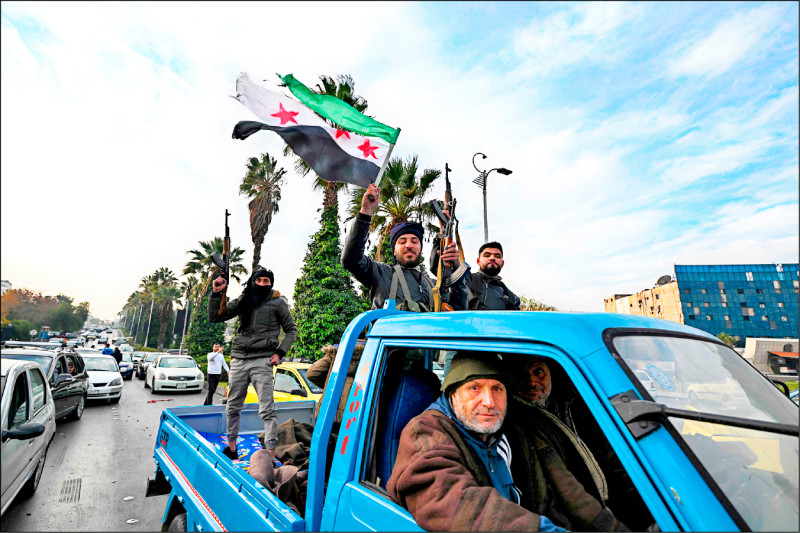
沙姆解放組織領導的敘利亞反抗軍聯盟,8日宣布攻佔首都大馬士革。(法新社)

沙姆解放組織領導的敘利亞反抗軍聯盟,8日宣布攻佔首都大馬士革。(法新社)

2024/12/09 05:30

內戰淪國際勢力的代理戰爭

〔編譯張沛元、陳成良/綜合報導〕敘利亞總統巴夏爾‧阿塞德在反抗軍攻入首都大馬士革後出逃,目前下落不明,甚至傳出座機疑似墜毀,為他在導致國家分崩離析、甚至淪為區域與國際強權代理人戰爭的長年內戰中的結局,劃下倉促且戲劇性的句點。阿塞德出逃標誌著敘利亞長達近十四年的內戰落幕,由阿塞德家族統治近五十四年的大馬士革政權也正式終結。

阿塞德廿四年前為延續家族政治王朝時上台,許多人曾期盼這名年僅卅四歲、接受西方教育的眼科醫生,能以年輕改革者之姿,一掃其軍事強人出身的亡父、前總統哈菲茲‧阿塞德(Hafez al-Assad)鐵腕統治卅年的陰霾。而看似溫和宅男的阿塞德上任之初,確實也曾令人耳目一新,包括釋放政治犯、開放更大的言論空間、主動與西方接觸,以及對民營企業開放,一度被譽為「大馬士革之春」。

然而,由於敘利亞獨裁體制不變,阿塞德上台後的改革氣氛也迅速消散;異議人士被抓捕入獄,經濟改革反而助長「寄生式」的裙帶關係與貪腐。隨著二○○三年美軍進攻伊拉克,翻轉中東權力平衡,敘利亞與西方的關係也漸趨緊張;據稱有敘利亞高層涉案的二○○五年黎巴嫩總理哈里里(Rafik al-Hariri)遇刺案,讓雙方關係更為惡化。

因此,當敘利亞在二○一一年三月爆發反政府抗爭時,原本並非老父原本屬意接班人的阿塞德,為鎮壓異己重返嚴酷路線。

老阿塞德原本屬意長子巴希爾(Bassel al-Assad)接班,但他在一九九四年的一場車禍中喪生。正在倫敦行醫的阿塞德被召回國,接受軍事訓練並晉升上校,為日後執政鋪路。二○○○年,國會甚至為他降低總統年齡限制,使其能順利當選。

隨著人民起義擴大為全面內戰,以伊朗與俄羅斯為靠山的阿塞德下令部隊轟炸反對派控制的城市,甚至遭西方指控使用化學武器、沙林毒氣與毀滅性的「桶爆彈」(barrel bomb),但阿塞德一概否認。

近14年內戰 50萬人死亡

近十四年的內戰造成近五十萬人死亡,戰前兩千三百萬人口中有半數流離失所,政府監獄還頻頻爆出大規模虐囚與未經審判便逕自處決的駭人事件。一度膠著的內戰在十一月下旬出現變化,西北部反抗勢力發動突襲,再加上阿塞德友軍陷入其他衝突而自顧不暇(俄羅斯陷入烏克蘭戰場僵局,伊朗扶植的黎巴嫩「真主黨」與巴勒斯坦「哈瑪斯」與以色列鏖戰),敘國政府軍迅速崩潰,最終導致阿塞德王朝覆沒。

https://news.ltn.com.tw/news/world/paper/1681266

請從論壇首頁右上角進入「個人中心」,就可以編輯您個人的頭像、簽名檔及自我介紹。請用高級模式回覆,點HTML框,可有更多變化豐富版面。
不怕辛苦,就怕不公平;不怕卑微,就怕不公義。
可以哭泣,不要洩氣;可以悲傷,不要放棄!

TOP

沒墜機!俄官媒證實敘利亞總統阿塞德抵莫斯科 已獲政治庇護

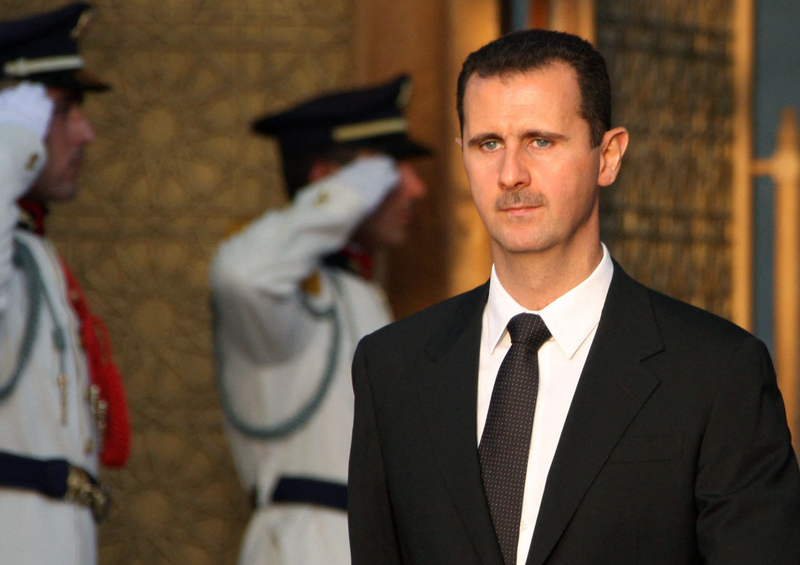
俄羅斯官方媒體證實,敘利亞總統阿塞德及其家人,目前已在莫斯科並獲得庇護。(法新社)

俄羅斯官方媒體證實,敘利亞總統阿塞德及其家人,目前已在莫斯科並獲得庇護。(法新社)

2024/12/09 03:51

首次上稿 02:52
更新時間 03:51(拜登在白宮發言)

祝蘭蕙/核稿編輯

〔即時新聞/綜合報導〕敘利亞反抗軍「沙姆解放組織」(HTS)近期對政府軍發起猛攻,8日成功拿下首都大馬士革(Damascus),總統阿塞德(Bashar al-Assad)倉皇逃離。俄羅斯官方媒體證實,敘利亞總統阿塞德及其家人,目前已在莫斯科並獲得政治庇護。

據俄羅斯官媒《塔斯社》引述克里姆林宮消息人士說法報導,被推翻出逃的阿塞德跟他的家人目前已抵達莫斯科,出於人道主義原因,俄羅斯將為他們提供庇護。消息人士並補充表示,俄羅斯官員正在與敘利亞武裝反對派代表保持聯繫,他們的領導人保證了俄羅斯在敘利亞領土上的軍事基地和外交使團的安全。

阿塞德垮台 拜登:美方將採取3個行動

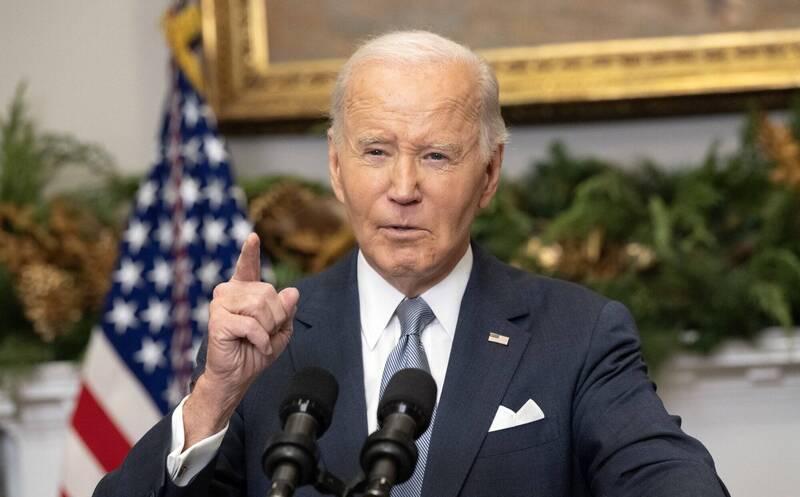
《CNN》報導,在俄羅斯媒體曝光阿塞德家族抵達莫斯科後,美國總統拜登在白宮發表演說時表示,阿塞德政權的垮台是正義之舉,為敘利亞人民提供了歷史性機會。不過拜登說,「這也是一個充滿風險和不確定性的時刻,因為我們都在思考接下來會發生什麼的問題。美國將與在敘利亞的合作夥伴和利益相關者合作,幫助他們抓住機會,管理風險。」

拜登同時提出了美國在阿塞德政權垮台後將採取的3點行動,包括:
首先,如果敘利亞在此過渡時期有任何威脅,將支持敘利亞的鄰國,包括約旦、黎巴嫩、伊拉克和以色列。
其次,美國將幫助確保敘利亞東部的穩定,保護任何人員、我們的人員免受任何威脅,並將繼續執行我們打擊伊斯蘭國(ISIS)的任務,包括確保關押伊斯蘭國武裝份子拘留設施的安全。拜登表示,美國正在優先努力防止伊斯蘭國死灰復燃。
第三,美國將與所有敘利亞團體進行接觸,包括在聯合國領導下的過程中進行接觸,以建立一個從阿塞德政權過渡到「一個擁有新憲法和新政府的獨立和主權的敘利亞。」

沙姆解放組織8日揮軍攻入首都大馬士革,宣布推翻阿塞德暴政,結束該國持續13年的內戰,大馬士革到處可見民眾歡呼慶祝。自2015年介入敘利亞內戰的俄羅斯稍早也發布消息,證實阿塞德政權垮台。

先前有外媒報導,阿塞德疑似搭乘1架伊留申-76型(Ilyushin 76)軍用運輸機從大馬士革機場起飛,但沒多久飛機亮點即從雷達消失,因而傳出航機墜毀傳聞。前伊拉克議員薩塔爾(Omar Abdul Satar)也在X平台表示,「反抗軍宣稱他們擊落阿塞德的飛機」,如今俄國官媒報導阿塞德及家人在莫斯科,間接證實了墜機傳聞的謬誤。

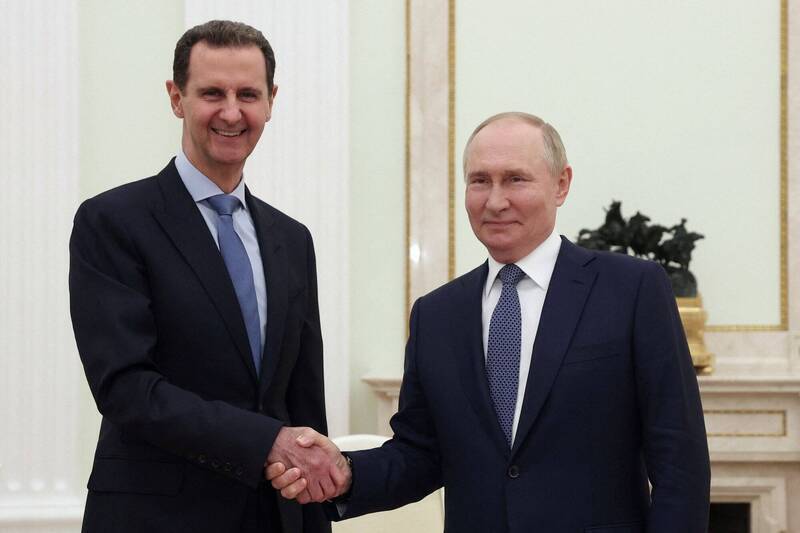
敘利亞總統阿塞德(左)今年7月中旬與俄羅斯總統普廷(右)進行會晤。(路透)

敘利亞總統阿塞德(左)今年7月中旬與俄羅斯總統普廷(右)進行會晤。(路透)

美國總統拜登在白宮發表演說表示,阿塞德政權的垮台是正義之舉,為敘利亞人民提供了歷史性機會。(歐新社)

美國總統拜登在白宮發表演說表示,阿塞德政權的垮台是正義之舉,為敘利亞人民提供了歷史性機會。(歐新社)

https://news.ltn.com.tw/news/world/breakingnews/4887853

請從論壇首頁右上角進入「個人中心」,就可以編輯您個人的頭像、簽名檔及自我介紹。請用高級模式回覆,點HTML框,可有更多變化豐富版面。
不怕辛苦,就怕不公平;不怕卑微,就怕不公義。
可以哭泣,不要洩氣;可以悲傷,不要放棄!

TOP

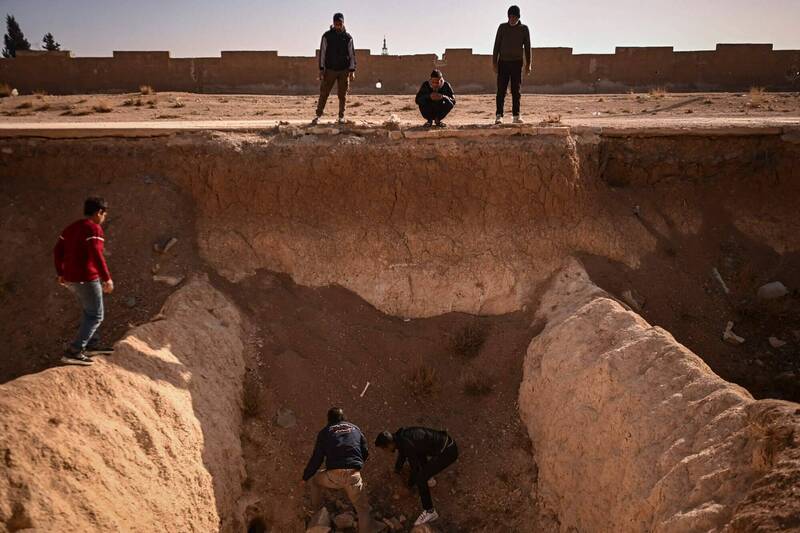
阿塞德惡行曝光!大馬士革發現亂葬崗 推測10萬人死於非命

敘利亞民眾16日在大馬士革郊區一處亂葬崗尋找遺體。(法新社)

敘利亞民眾16日在大馬士革郊區一處亂葬崗尋找遺體。(法新社)

2024/12/17 17:57

〔編譯管淑平/綜合報導〕敘利亞獨裁者阿塞德(Bashar al-Assad)垮台後,他統治期間的真實情況陸續被揭露。敘利亞倡議組織16日指出,首都大馬士革郊外發現一處亂葬崗,當中至少埋有10萬具遺骸,推測都是命喪於阿塞德政府之手的人。

總部設於美國的該組織「敘利亞緊急特遣隊(Syrian Emergency Task Force)」執行長穆斯塔法(Mouaz Moustafa)16日在大馬士革,透過電話向國際通訊社《路透》表示,這座亂葬崗位於大馬士革以北約40公里古塔法(Al-Qutayfah),是他多年來所找到的5座大型亂葬崗之一。

他說:「(亂葬崗中掩埋)10萬人只是最保守的估計」,「這是非常、非常保守的估計,保守到幾乎到不合理的程度」。他可以肯定,敘國境內的亂葬崗不只這5座,除了敘利亞人,受害者也包括美國、英國和其他外籍人士。

路透無法證實穆斯塔法的說法。敘國駐聯合國大使尚未回應此事。

穆斯塔法在阿塞德垮台後前往敘利亞。他說,該組織設法與曾在亂葬崗工作的人談過,這些人揭發了亂葬崗之事;有推土機駕駛透露,被迫挖掘墳坑,而且「多次奉命把遺體壓扁以塞進坑內,再以土掩埋」。

這些受害者遭當局折磨致死後,由軍方醫院收集遺體,再由空軍情報部門負責,把遺體運往其他多個不同情報機構,最後送到亂葬崗。大馬士革巿政府負責殯葬業務部門,也會派人協助運屍。

向該組織透露內情的人,有的已經自行、有的在該組織協助下逃離敘國。穆斯塔法呼籲,須妥善保存所有遺骸,以保全證據,留待進行相關調查。

阿塞德大規模鎮壓反政府運動,於2011年演變成全面內戰以後,估計已有數十萬人遇害。敘國民眾、人權團體和外國政府都曾指控,阿塞德和其父哈菲茲.阿塞德(Hafez al-Assad)執政期間廣泛進行私刑,包括在惡名昭彰的監獄中進行大規模處決。但阿塞德政府一再否認這些指控他侵害人權之說,並指批評者為極端分子。

https://news.ltn.com.tw/news/world/breakingnews/4896421

請從論壇首頁右上角進入「個人中心」,就可以編輯您個人的頭像、簽名檔及自我介紹。請用高級模式回覆,點HTML框,可有更多變化豐富版面。
不怕辛苦,就怕不公平;不怕卑微,就怕不公義。
可以哭泣,不要洩氣;可以悲傷,不要放棄!

TOP

返回列表