Manuel Antonio Noriega Moreno[2] (Spanish pronunciation: [maˈnwel noˈɾjeɣa]; February 11, 1934 – May 29, 2017)[3] was a Panamanian politician and military officer. He was military dictator ofPanama from 1983 to 1989, when he was removed from power by the United States during theinvasion of Panama.[4]
From the 1950s until shortly before the U.S. invasion, Noriega worked closely with the U.S. Central Intelligence Agency. Noriega was one of the CIA's most valued intelligence sources, as well as one of the primary conduits for illicit weapons, military equipment and cash destined for U.S.-backed counter-insurgency forces throughout Central and South America. Noriega was also a major cocainetrafficker, something which his U.S. intelligence handlers were aware of for years, but allowed because of his usefulness for their covert military operations in Latin America.[5][6][7][8]
In 1988, Noriega was indicted by the United States on drug trafficking charges in Miami, Florida. During the 1989 U.S. invasion of Panama, he was removed from power, captured, detained as a prisoner of war, and flown to the United States. Noriega was tried on eight counts of drug trafficking, racketeering, and money laundering in April 1992. On September 16, 1992, he was sentenced to 40 years in prison (which was later reduced to 30 years).
Noriega's U.S. prison sentence ended in September 2007;[9] pending the outcome of extradition requests by both Panama and France, for convictions in absentia for murder in 1995 and money laundering in 1999. France was granted its extradition request in April 2010. He arrived in Paris on April 27, 2010,[10] and after the re-trial that is a rule in France after any in absentia sentence, he was found guilty and sentenced to seven years in jail in July 2010.[11] A conditional release was granted on September 23, 2011, for Noriega to be extradited to serve 20 years in Panama. He returned to Panama on December 11, 2011. Noriega died at Hospital Santo Tomas in Panama City on May 29, 2017,[12] two months after brain surgery.[13]
Early lifeEdit
Noriega was born in Panama City on February 11, 1938. His family was of Colombian heritage, and was not well off.[14] He was educated at the Instituto Nacional, a well-regarded high school in Panama City before winning a scholarship to Chorrillos Military School in Lima, Peru.[16][14]
He returned to Panama and was given a commission as a sublieutenant in the Panama National Guard, and posted to Colón. There he made the acquaintance of Omar Torrijos, and would become an important supporter of him.[14][17] As a First Lieutenant, Noriega traveled to the United States in 1967, and spent many months taking courses at the School of the Americas at the U.S. Army's Fort Gulick in the Panama Canal Zone. His training there included courses on infantry operations,counterintelligence, intelligence, and jungle operations.[18] He also took a course in psychological operations at Fort Bragg in North Carolina.[7]
Rise to powerEdit
In 1968 Torrijos led a coup against Panama President Arnulfo Arias. Noriega was an important supporter of Torrijos during the power struggle that followed.[17] He received a promotion tolieutenant colonel and was appointed chief of military intelligence by Torrijos.[17] He would also play a major role in thwarting a later coup attemp against Torrijos.[14] Torrijos would retain power as a military ruler until 1981: during this time he negotiated the Torrijos–Carter Treaties with US President Jimmy Carter, which ensured that control over the Panama canal would pass to Panama in 1999.[7] Torrijos died in a plane accident on July 31, 1981, under mysterious circumstances. After a brief power struggle between various military leaders, brought on by the absence of a clear protocol for transfer of power, Noriega became the real power behind the government as the head of the security forces. Two years later, in 1983, Noriega promoted himself to Colonel, giving him even more power.[17][7]
De facto rule of PanamaEdit
Noriega strengthened his position as de facto ruler in August 1983 by promoting himself to full general. Noriega, being paid by the CIA, extended new rights to the United States, and, despite the canal treaties, allowed the U.S. to set up listening posts in Panama. He aided the American-backed guerrillas in Nicaragua by acting as a conduit for U.S. money and, according to some accounts, weapons. Noriega insists that his policy during this period was essentially neutral, allowing partisans on both sides of the various conflicts free movement in Panama, as long as they did not attempt to use Panama as a base of military operations. He rebuffed requests by Salvadoran rightist Roberto D'Aubuisson to restrict the movements of leaders of the leftist Salvadoran insurgent Farabundo Martí National Liberation Front in Panama, and likewise rebuffed demands by Lieutenant ColonelOliver North of the United States Marine Corps that he provide military assistance to the NicaraguanContras. Noriega insists that his refusal to meet North's demands was the actual basis for the U.S. campaign to oust him.
In May 1984, Noriega allowed the first presidential elections in 16 years. When the initial results showed former president Arnulfo Arias on his way to a landslide victory, Noriega halted the count. After brazenly manipulating the results, the government announced that the PRD's candidate,Nicolás Ardito Barletta Vallarino, had won by a slim margin of 1,713 votes. Independent estimates suggested that Arias would have won by as many as 50,000 votes had the election been conducted fairly.[20]
About this time, Hugo Spadafora, a vocal critic of Noriega who had been living abroad, accused Noriega of having connections to drug trafficking and announced his intent to return to Panama to oppose him. He was seized from a bus by a death squad at the Costa Rican border. Later, his decapitated body was found, showing signs of extreme torture, wrapped in a United States Postal Service mailing bag.[21] His family and other groups called for an investigation into his murder, but Noriega stonewalled any attempts at an investigation. Noriega was in Paris at the time of the murder, which was alleged by some to have been at the direction of his Chiriquí Provincecommander, Luis Córdoba.[20] A conversation captured on wiretap between Noriega (in Paris) and Córdoba included the exchange:
- Córdoba: "We have the rabid dog."
- Noriega: "And what does one do with a dog that has rabies?"[20]
President Barletta was visiting New York City at the time. A reporter asked him about the Spadafora matter, and he promised an investigation. Upon his return to Panama, he was summoned to FDP headquarters and told to resign. He was replaced by First Vice President Eric Arturo Delvalle. As a friend and former student of George Shultz, Barletta had been considered "sacrosanct" by the United States, and his dismissal signaled a marked downturn in the relations between the U.S. and Noriega.[20] Herrera, a former member of Noriega's inner circle, told Panama's main opposition newspaper, La Prensa, that Noriega was behind Spadafora's murder, and many other killings and disappearances as well. This resulted in an immediate outcry from the public.
The Civic Crusade, which opposed Noriega, was formed in 1987.[22][23] Supporters of Noriega referred to the Civic Crusade as a creature of the rabiblancos or "white-tails", the wealthy elite of European descent that dominated Panamanian commerce and had dominated Panamanian politics before the advent of Torrijos.[24] Noriega, like Torrijos, was dark-skinned and claimed to represent the majority population, who were poor and of Zambo heritage (mixed African and Amerindianancestry). Noriega supporters mocked the demonstrations of the Civic Crusade as "the protest of the Mercedes-Benz", deriding the wealthy ladies for banging on Teflon-coated pots and pans rather than the cruder and louder pots and pans traditionally banged by the poor in South American protests, or for sending their maids to protest for them. Many rallies were held, with white cloths used as the symbol of the opposition. Noriega was always one step ahead of them, having informants within their groups notify his police in advance and routinely rounding up leaders and organizers the night before rallies. All of the peaceful rallies were brutally dispersed by Noriega's army and paramilitary forces, known as the Dignity Battalions.[25] Many people were beaten severely, incarcerated, and killed during the protests. Meanwhile, he arranged rallies of his own, often under threat (for example, taxi drivers were told they had to attend a rally in support of Noriega or lose their licenses). Noriega claims that the Civic Crusade was the handiwork of U.S. Embassy chargé d'affaires John Maisto, who had arranged for Civic Crusade leaders to travel to the Philippines to learn the tactics of the U.S.-supported movement to overthrow Ferdinand Marcos.
United States supportEdit
Although the relationship did not become contractual until 1967, Noriega worked with the U.S.Central Intelligence Agency (CIA) from the late 1950s until the 1980s.[26] The 1988 Senate Subcommittee on Terrorism, Narcotics and International Operations concluded: "The saga of Panama's General Manuel Antonio Noriega represents one of the most serious foreign policy failures for the United States. Throughout the 1970s and the 1980s, Noriega was able to manipulate U.S. policy toward his country, while skillfully accumulating near-absolute power in Panama. It is clear that each U.S. government agency which had a relationship with Noriega turned a blind eye to his corruption and drug dealing, even as he was emerging as a key player on behalf of the Medellín Cartel (a member of which was notorious Colombian drug lord Pablo Escobar)." Noriega was allowed to establish "the hemisphere's first 'narcokleptocracy'".[27] One of the large financial institutions that he was able to use to launder money was the Bank of Credit and Commerce International. In the 1988 U.S. presidential election, Democratic candidate Michael Dukakishighlighted this history in a campaign commercial attacking his opponent, Vice President (and former CIA Director) George H. W. Bush, for his close relationship with "Panamanian drug lord Noriega."[28]
Noriega would continue to have a close relationship with the US School of the Americas during his Presidency, partly due to the latter having an outpost in Panama. Officials from the Panamanian military were frequently given courses at the school free of charge. Noriega himself was proud of his relationship with the school, and would wear its crest on his military uniform.[18]
1989 electionEdit
The elections of May 1989 were surrounded by controversy. A PRD-led coalition nominated Carlos Duque, publisher of the country's oldest newspaper, La Estrella de Panamá. Most of the other political parties banded behind a unified ticket of Guillermo Endara, a member of Arias' Authentic Panameñista Party, along with vice-presidential candidates Ricardo Arias Calderón (no relation to Arnulfo Arias) and Guillermo Ford.[20]
According to Guillermo Sanchez, the opposition alliance knew that Noriega planned to rig the count, but had no way of proving it.[20] They found a way through a loophole in Panamanian election law. The alliance, with the support of the Roman Catholic Church, set up a count based directly on results at the country's 4,000 election precincts before the results were sent to district centers. Noriega's lackeys swapped fake tally sheets for the real ones and took those to the district centers, but by this time the opposition's more accurate count was already out. It showed Endara winning in a landslide even more massive than in 1984, beating Duque by a 3-to-1 margin. Noriega had every intention of declaring Duque the winner regardless of the actual results. Duque knew he had been badly defeated and refused to go along.[20]
Rather than publish the results, Noriega voided the election, claiming "foreign (i.e., American) interference" had tainted the results. Former U.S. President Jimmy Carter, there as an observer, denounced Noriega, saying the election had been "stolen", as did Bishop Marcos G. McGrath.[20]
The next day, Endara, Arias Calderón, and Ford rolled through the old part of the capital in a triumphant motorcade, only to be intercepted by a detachment of Noriega's paramilitary Dignity Battalions. Arias Calderón was protected by a couple of troops, but Endara and Ford were badly beaten. Images of Ford running to safety with his guayabera shirt covered in blood were broadcast around the world. When the 1984–89 presidential term expired, Noriega named a longtime associate, Francisco Rodríguez, as acting president. The United States recognized Endara as the new president.[20]
United States invasion of PanamaEdit
The U.S. imposed economic sanctions and, in the months that followed, a tense standoff occurred between the U.S. military forces (stationed in the canal area) and Noriega's troops. On December 15, 1989, the PRD-dominated legislature spoke of "a state of war" between the United States and Panama. It also declared Noriega "chief executive officer" of the government, formalizing a state of affairs that had existed for six years.[20] Noriega subsequently claimed[29] that this statement referred to U.S. actions against Panama, and did not represent a declaration of hostilities by Panama. The U.S. forces conducted regular "freedom of movement" maneuvers and operations, such as Operation Sand Flea and Operation Purple Storm. Serving in part as military drills, but also as psychological warfare designed to harass the future enemy,[citation needed] the U.S. military contended that the exercises were justified by the Panama Canal Treaty of 1977 (the Torrijos-Carter Treaties), which guaranteed U.S. forces freedom of movement in the country in defense of the canal. Panama considered the exercises a violation of the treaties, and Noriega called them acts of war.
On the other hand, Noriega's forces are said to have engaged in routine harassment of U.S. troops and civilians. Three incidents in particular occurred very near the time of the invasion, and were mentioned by U.S. President George H. W. Bush as a reason for invasion.[30] In a December 16 incident, four U.S. personnel were stopped at a roadblock outside PDF headquarters in the El Chorrillo neighborhood of Panama City. The United States Department of Defense said that the servicemen were unarmed and in a private vehicle and that they attempted to flee the scene only after their vehicle was surrounded by a crowd of civilians and PDF troops. Second Lieutenant Robert Paz of the United States Marine Corps was shot and killed in the incident.[31] The Los Angeles Times claimed that sources stated Paz was a member of the Hard Chargers, a group not sanctioned by the military whose goal was to agitate members of the PDF.[32] The PDF claimed that the Americans were armed and on a reconnaissance mission.[33] Major General Marc A. Cisneros, deputy commander of the Southern Command at the time of the invasion, said in a recent interview, "The story you've got from somebody that these guys were a vigilante group trying to provoke an incident—that is absolutely false".[32] According to an official U.S. military report, a U.S. naval officer and his wife who were witnesses to the incident were assaulted by Panamanian Defense Force soldiers while in police custody.[34] A week before the U.S. invasion, a cable from an American diplomat to Washington described Noriega as a "master of survival" and, according toThe New York Times, the diplomat did not have an inkling of the coming invasion one week later.[35]
The U.S. invasion of Panama was launched on December 20, 1989. Losses on the U.S. side were 23 troops and 3 civilian casualties, while Panamanian losses were 150 troops and 500 civilian casualties.[36] On December 29, the General Assembly of the United Nations voted 75–20 with 40 abstentions to condemn the invasion as a flagrant violation of international law.[37][38] According to a CBS poll, 92% of Panamanian adults supported the U.S. incursion, and 76% wished that U.S. forces had invaded in October during the coup.[39] Activist Barbara Trent disputed this finding, claiming in a 1992 Academy Award winning documentary The Panama Deception that the Panamanian surveys were completed in wealthy, English-speaking neighborhoods in Panama City, among Panamanians most likely to support U.S. actions.[40]
On the fifth day of the invasion, Noriega and four others took sanctuaryin the Apostolic Nunciature, the Holy See's embassy in Panama.[41][42][43] Having threatened to flee to the countryside and lead guerrilla warfare if not given refuge, he instead turned over the majority of his weapons, and requested sanctuary from Monsignor Laboa.[41]He spent his time in a "stark" room with no air conditioning or television, reading the Bible for the duration of his stay.[41]
Prevented by treaty from invading the embassy of the Holy See, U.S. soldiers erected a perimeter around the Nunciature. Psychological warfare was used in an attempt to dislodge him, including blaring rock music, and turning a nearby field into a helicopter landing zone. After ten days of Operation Nifty Package, Noriega surrendered on January 3, 1990.[44] He was detained as a prisoner of war, and later taken to the United States.
Criminal prosecution in the United StatesEdit
In April 1992 a trial was held in Miami, Florida, at the United States District Court for the Southern District of Florida in which Noriega was tried and convicted on eight counts of drug trafficking, racketeering, and money laundering.
At his trial, Noriega intended to defend himself by presenting his alleged crimes within the framework of his work for the U.S. Central Intelligence Agency. The government objected to any disclosure of the purposes for which the United States had paid Noriega because this information was classified and its disclosure went against the interests of the United States. In pre-trial proceedings, the government offered to stipulate that Noriega had received approximately $220,000 from the United States Army and the Central Intelligence Agency. Noriega insisted that "the actual figure approached $10,000,000, and that he should be allowed to disclose the tasks he had performed for the United States". The district court held that the "information about the content of the discrete operations in which Noriega had engaged in exchange for the alleged payments was irrelevant to his defense". It ruled that the introduction of evidence about Noriega's role in the CIA would "confuse the jury".[45]
After the trial, Noriega appealed this exclusionary ruling by the judge to the United States Court of Appeals for the Eleventh Circuit. The Court of Appeals ruled in favor of the government, despite disagreeing with the lower court. It said: "Our review leads us to conclude that information regarding the purposes for which the United States previously paid Noriega potentially had some probative value ... Thus, the district court may have overstated the case when it declared evidence of the purposes for which the United States allegedly paid Noriega wholly irrelevant to his defense". The Court of Appeals refused to set aside the verdict because it felt that "the potential probative value of this material, however, was relatively marginal".[45]
On September 16, 1992, Noriega was sentenced to 40 years in prison, later reduced to 30 years.[46]
IncarcerationEdit
Before receiving his permanent prison assignment, Noriega was placed in the Federal Detention Center, Miami, facility.[47] Noriega resided in the Federal Correctional Institution, Miami, in an unincorporated area ofMiami-Dade County, Florida, and had the Federal Bureau of Prisons ID number 38699-079.[48]
Under Article 85 of the Third Geneva Convention,[49] Noriega was considered a prisoner of war, despite his conviction for acts committed prior to his capture by the "detaining power" (the United States). This status meant that in Florida he had his own prison cell, furnished with electronics and exercise equipment.[50] His cell had been nicknamed "the presidential suite".[51][52]
It was reported that Noriega had been visited by evangelical Christians, who claimed that he had become a born-again Christian.[53] On May 15 and 16, 1990, while Noriega still awaited trial, Clift Brannon, a former attorney turned preacher, and a Spanish interpreter, Rudy Hernandez, were allowed to visit Noriega for a total of six hours at the Metropolitan Correctional Center of Dade County, Florida. Following the visit, Noriega wrote Brannon a letter stating:
On completing the spiritual sessions that you as a messenger of the Word of God brought to my heart, even to my area of confinement as Prisoner of War of the United States, I feel the necessity of adding something more to what I was able to say to you as we parted. The evening sessions of May 15 and 16 with you and Rudy Hernandez along with the Christian explanation and guidance were for me the first day of a dream, a revelation. I can tell you with great strength and inspiration that receiving our Lord Jesus Christ as Savior guided by you, was an emotional event. The hours flew by without my being aware. I could have desired that they continue forever, but there was no time nor space. Thank you for your time. Thank you for your human warmth, for your constant and permanent spiritual strength brought to bear on my mind and soul. – With great affection, Manuel A. Noriega[54]
Noriega's prison sentence was reduced from 30 years to 17 years for good behavior. After serving 17 years in detention and imprisonment, his sentence ended on September 9, 2007.[9]
Criminal prosecution in FranceEdit
" border="0" smilieid="10" sweat.gif? default smilies images .>a-Sante-Prison-MCB.jpg">
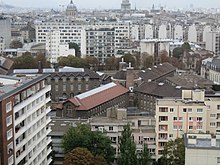
The French government requested Noriega's extradition after he was convicted of money laundering in 1999. The French claimed that Noriega had laundered $3 million in drug proceeds by purchasing luxury apartments in Paris. Noriega was convicted in absentia, but French law requires a new trial after the subject of an 'in absentia; sentence is apprehended. He faced up to 10 years in French prison if convicted.[50][55]
In August 2007, a U.S. federal judge approved a request from the French government to extradite Noriega from the United States to France after his release. Noriega has also received a long jail term in absentia in Panama for murder and human rights abuses. Noriega appealed his extradition to France because he claimed that country would not honor his legal status as a prisoner of war.[56] In 1999, the Panamanian government sought the extradition of Noriega to face murder charges in Panama because he had been found guilty in absentia in 1995 and sentenced to 20 years in prison.
On February 20, 2010, Noriega's lawyers filed a petition with the Supreme Court of the United States to block his extradition to France, after the court refused to hear his appeal the previous month.[57] Noriega's attorneys had hoped the dissenting opinion in that ruling, written by JusticesClarence Thomas and Antonin Scalia, would convince the full court to take up his case, but on March 22, 2010, the Supreme Court refused to hear the petition.[58] Two days after the refusal, theUnited States District Court for the Southern District of Florida in Miami lifted the stay that was blocking Noriega's extradition. Later that month, after Secretary of State Hillary Clinton signed the surrender warrant,[59] Noriega's attorney stated that he would travel to France and try to arrange a deal with the French government.[60]
On April 26, 2010, Noriega was extradited to France.[55] Noriega's lawyers claimed the La Santé Prison, at which he was held, was unfit for a man of his age and rank; the French government refused to grant him prisoner of war status, as he had in the United States.[11]
ConvictionEdit
On July 7, 2010, Noriega was convicted by the 11th chamber of the Tribunal Correctionnel de Paris and sentenced to seven years in jail.[11][61] The prosecutor in the case had sought a ten-year prison term.[61] In addition, €2.3 million (approximately US$3.6 million) that had long been frozen in Noriega's French bank accounts was ordered to be seized.[11]
Return to PanamaEdit
Panama asked France to extradite Noriega so he could face trial for human rights violations there. The French government had previously stated that extradition would not happen before the case in France had run its course.[62] On September 23, 2011, a French court ordered a conditional release for Noriega to be extradited to Panama on October 1, 2011.[63] He was extradited on December 11 and incarcerated at El Renacer prison to serve time for crimes committed during his rule.
Illness and deathEdit
On February 5, 2012, Noriega was moved from the El Renacer prison to the Hospital Santo Tomasbecause of high blood pressure and a brain hemorrhage. He remained in the hospital for four days before being returned to prison.[64] In January 2017, he was released from prison and placed underhouse arrest to prepare for surgery that would remove a benign tumor that was first discovered in 2011. During the surgery in March 2017, he suffered a brain hemorrhage which left him in critical condition in the intensive care unit of Santo Tomas hospital in Panama City.[65][66]
Noriega died on May 29, 2017.[67] Panamanian President Juan Carlos Varela announced Noriega's death on Twitter shortly before midnight, writing, "The death of Manuel A. Noriega closes a chapter in our history; his daughters and his relatives deserve to bury him in peace."[68]
In popular cultureEdit
British actor Bob Hoskins portrayed Manuel Noriega in the 2000 TV movie Noriega: God's Favorite.[69] Hoskins was nominated for a Satellite Award for his role in the film.[70]
Video gamesEdit
Noriega was depicted in Call of Duty: Black Ops II.[71] In July 2014, he filed a lawsuit against the game company Activision for depicting him and using his name without his permission. Noriega, who filed the suit while in prison for murder, claims he is portrayed as “a kidnapper, murderer and enemy of the state”.[72] In gameplay Noriega's character is referred to as "Old Pineapple Face", by fictional character Frank Woods. The name "Old Pineapple Face" was an actual nickname for Noriega used by Panamanians.[73] On October 28, 2014, the case against Activision was thrown out of court.[74]
In the video game Tropico 4, Manuel Noriega is one of several dictators the player can choose from the avatar menu.[75]
References 


 INKS">格式手冊規範。


